Professional kitchen canopy cleaning to AS/NZS 1851 compliance standards — reducing fire risk and keeping your business protected.
Commercial kitchen canopy cleaning (also called exhaust hood cleaning or range hood cleaning) is the deep removal of grease, carbon deposits and contaminants from your kitchen's exhaust system — including the canopy hood, grease baffles, plenum chambers, exhaust ducting and exhaust fans.
Grease accumulation in commercial kitchens is one of the leading causes of restaurant fires in Australia. Regular professional cleaning is not just best practice — it is a legal requirement under Australian building and fire safety standards.
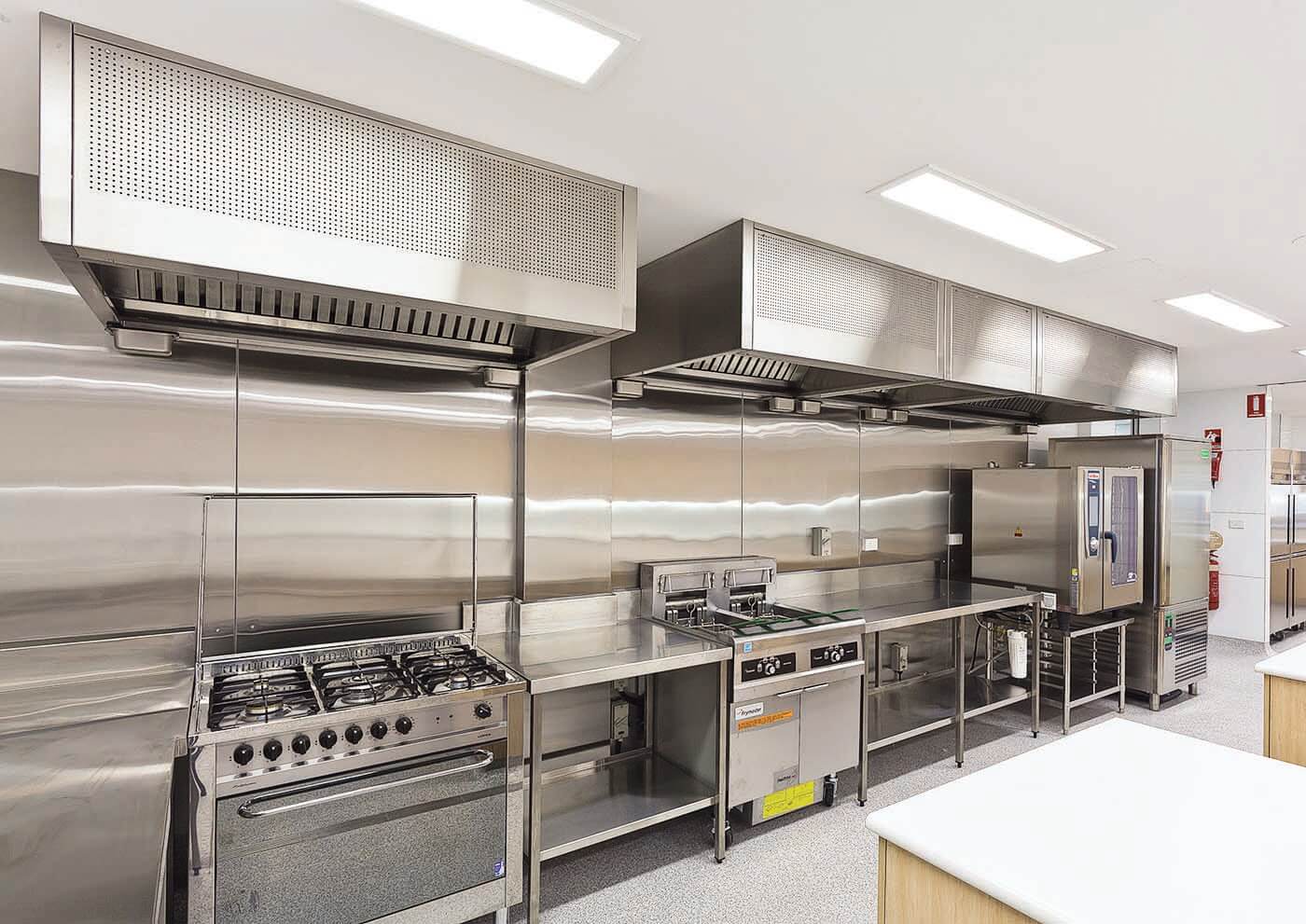
Removal, degreasing and reinstallation of all grease baffle filters to manufacturer specifications.
Full degreasing of the internal canopy hood surfaces and plenum chamber where grease accumulates most.
Internal cleaning of all accessible duct sections using high-pressure steam and chemical degreasers.
Cleaning of exhaust fan blades, housing and motor housing to prevent grease build-up and motor failure.
Photographic documentation of the condition before and after each clean for your compliance records.
AS/NZS 1851 compliance certificate issued on the same day — essential for your insurance and council inspections.
Failure to maintain your kitchen exhaust system can void your insurance and expose you to significant legal liability.
The primary Australian standard governing kitchen exhaust cleaning is AS/NZS 1851-2012 — "Routine service of fire protection systems and equipment." This standard mandates:
Section E of the NCC requires commercial kitchens to maintain exhaust systems in a clean and safe condition. Failure to comply can result in:
Under the Victorian Food Act 1984, food premises must be maintained in a clean, safe condition at all times. This extends to your exhaust and ventilation systems. Environmental Health Officers (EHOs) can and do inspect kitchen exhaust systems during routine inspections.
High-volume operations: burger bars, fish & chip shops, wok kitchens, 24/7 venues
Moderate-use kitchens: cafés, bistros, pub kitchens, school canteens
Low-use kitchens: small restaurants, function centres with infrequent use
Minimal use: office kitchenettes, small kiosks, seasonal venues
Frequency should always be determined by a qualified technician based on grease accumulation levels, not solely by a calendar schedule. Blue Sky Filtration technicians assess and recommend the correct frequency for your specific operation.
Grease build-up in exhaust systems is responsible for over 60% of commercial kitchen fires in Australia. A single 3mm grease deposit is enough to ignite under high-heat cooking conditions. Regular cleaning is your first line of defence.
Most commercial property insurance policies include clauses requiring the insured to maintain exhaust systems in compliance with AS1851. Without a valid compliance certificate, your claim can be denied — even if the fire wasn't directly caused by poor maintenance.
Environmental Health Officers in Victoria inspect kitchen exhaust systems as part of routine food premises audits. They look for service records, current compliance certificates, and visible evidence of regular maintenance. Be prepared with documented cleaning history.